Why Handmade Objects Matter
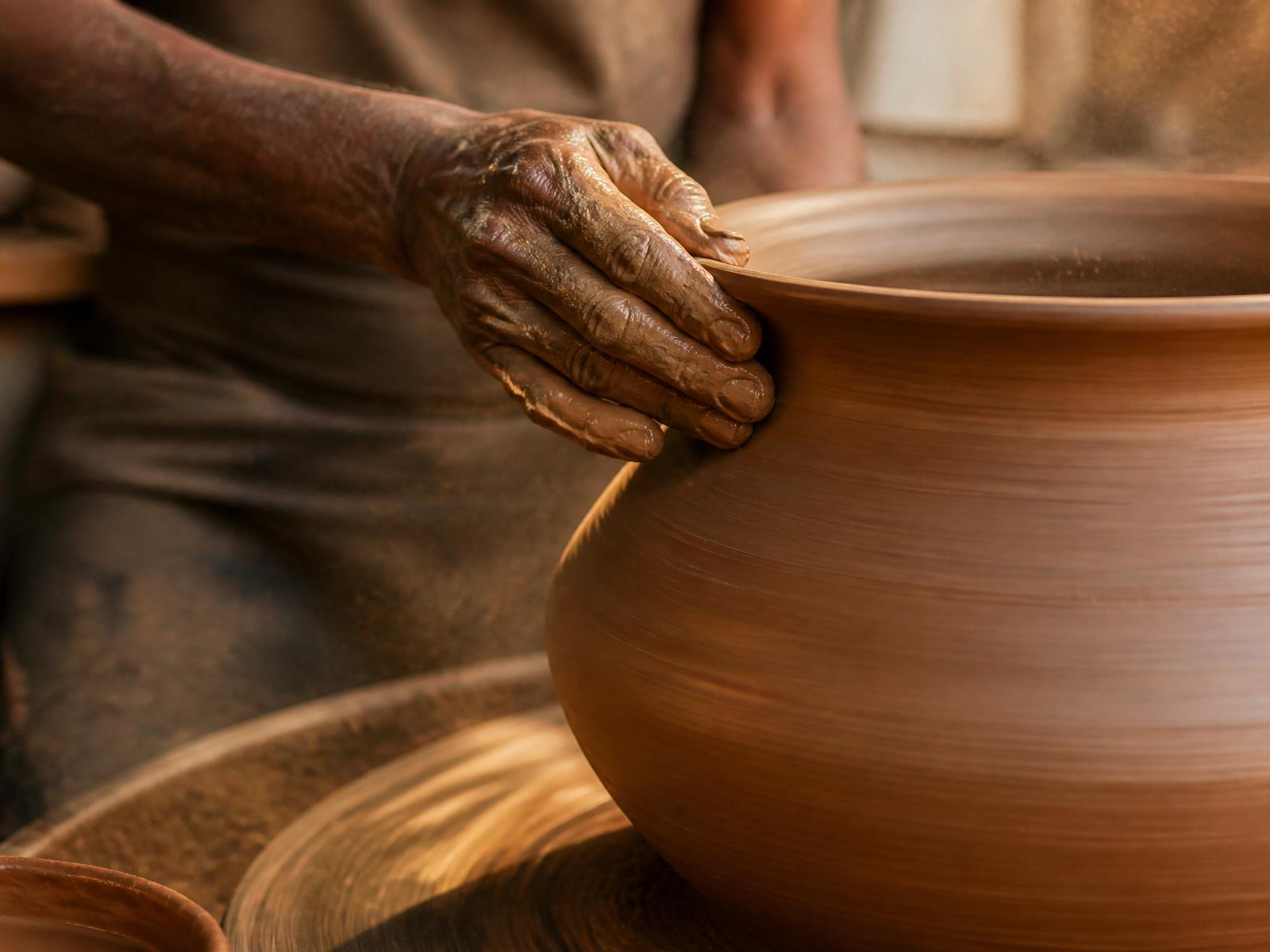
The economics of the hand, and why the imprint of a maker is the only detail worth keeping.
There is a specific quality that a room only takes on when the objects inside it were made by human hands. It is not nostalgia. It is not warmth in the vague sense. It is the presence of decisions — thousands of small ones, each of which could have gone another way.
A machine-made vessel is the result of a single decision, executed a million times. A hand-thrown vessel is the result of a million decisions, executed once. That difference is what a considered eye registers, whether or not it names it.
The economics are honest: hand work costs more, moves more slowly, and yields less. But it also lasts longer — physically, aesthetically, culturally. An object made by a person tends to be repaired rather than replaced. It carries a story worth keeping.
This is the argument the ARVEMIO catalogue makes, quietly and without much rhetoric. The imprint of a maker is not a defect to be polished out. It is the only detail worth keeping.